
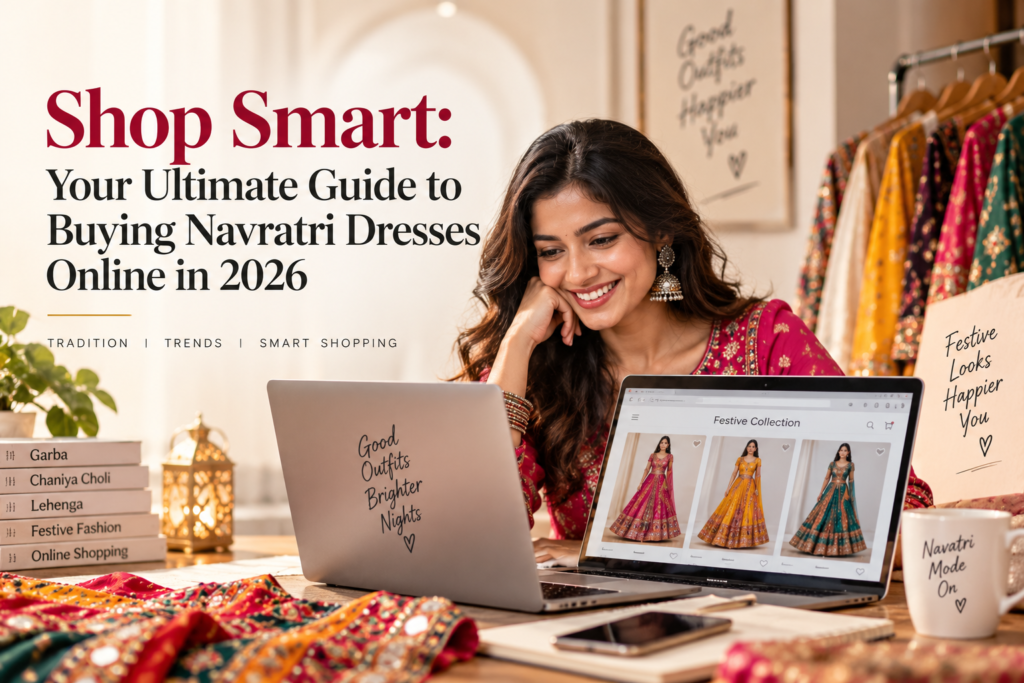
Sharad Navratri 2026 runs from 11 to 19 October. Ordering an outfit online for it isn’t complicated, but a few small mistakes (bad timing, guessing at sizing, ignoring the return policy) are what usually turn into a last-minute scramble. Here’s how to do it properly.
Order based on the outfit, not just the festival date
Don’t use the festival date alone to decide when to order. A ready-to-wear piece may need only the seller’s stated delivery window. Made-to-order, stitched or customised pieces need extra time for production and alterations on top of that.
If you’re shopping for a specific colour or a particular night, leave enough time to receive the outfit, try it on, and still have room to exchange it if the fit is off. For anything customised, check the seller’s production timeline before you pay, not after.
Match the platform to what you’re buying
| Platform type | What to actually check |
| Large marketplaces (Myntra, Ajio, Amazon Fashion) | Seller rating, buyer reviews, delivery date, return eligibility for that specific listing |
| Ethnic wear specialists (Utsav Fashion, Mirraw, Panash India) | Stitching options, measurement charts, production time, and whether custom pieces are excluded from returns |
| D2C brand websites | Brand specific sizing, fabric details, and the return window |
| Rental platforms | Rental period, deposit, damage rules, cleaning charges, delivery timing |
Return windows and policies genuinely differ by platform and even by product category on the same platform, so treat any specific number you see quoted online as a starting point to verify, not a fact to rely on.
Getting sizing right without trying it on
- Check the size chart against a piece you already own with a similar fit, not just your usual ready to wear size.
- For a blouse, prioritise the bust and shoulder measurements. For a lehenga or skirt, check the waist measurement and whether the waistband is adjustable.
- If the seller lists both garment measurements and body measurements, compare both against something you already own that fits well.
- If a blouse is stitched to order, take your actual body measurements properly rather than guessing your usual size.
Read reviews like it’s your job
- Look for reviews posted after delivery with photos, not just the star rating. A four or five star average doesn’t tell you whether the colour, fabric weight, or embroidery matched the listing.
- If several buyers independently mention the same issue, colour looking darker than the photos, or embroidery feeling thinner than shown, treat that pattern as far more useful than any single review.
- Check whether the fabric named in the listing matches what reviewers actually describe. A “silk” that multiple buyers call synthetic is worth noting.
Before you click buy: the return policy checklist
- Return window – how many days after delivery, for this specific product?
- Return eligibility – is this particular item returnable at all?
- Custom stitching – are made to order or altered pieces excluded?
- Exchange vs refund – which one will you actually get?
- Return shipping – who pays for it?
- Tags and packaging – what needs to stay intact?
- Sale items – does a discount change the return terms?
Policies change, and marketplaces often apply different rules to different products on the same site. Check the actual product page and the seller’s current policy right before you place the order, not from memory of what it said last year.
Don’t compare only the sticker price
Real cost = outfit price + shipping + alterations or stitching + accessories + possible return shipping.
A cheaper lehenga isn’t actually cheaper if it needs paid alterations or comes with expensive return shipping if it doesn’t work out.
Budget-friendly ways to build your Navratri wardrobe
- Buy separates, a blouse and skirt from different sellers, if that gets you better fabric within budget than a matched set would.
- Rework something you already own with a new dupatta or jewellery instead of buying fresh for every one of the nine nights. Set a festive budget before you start browsing, it holds up better than any discount code.
- Renting can make sense for a heavy, occasion-specific lehenga you don’t expect to wear again. Buying tends to be more practical for something you can restyle for weddings, Diwali, or other festive events later.
Red flags to watch for
- Prices well below every other listing for similar embellishment work
- No return policy stated anywhere on the listing
- The same stock photos appearing across unrelated seller pages
- Payment requested outside the platform’s own checkout
FAQ
How early should I order a Navratri outfit online?
Base it on the outfit type rather than the festival date. Ready-made pieces usually need only the seller’s stated delivery window. Anything stitched to order or customised needs extra production time on top of that, so check the seller’s timeline directly.
Is it better to rent or buy a Navratri outfit?
Renting can make sense for a heavy, occasion-specific lehenga you’re unlikely to wear again. Buying tends to work out better for pieces you can restyle for other festive occasions later.